Web Design
How to Choose the Right Web Designer for Your Business
Learn how to compare web designers, ask better questions, and choose the right fit for your business without deciding on price or appearance alone.
Your website is often the first impression a potential client gets of your business — before they call, before they walk in, before they ever shake your hand. So it makes sense that choosing the right person (or team) to build it shouldn't be a rushed decision. If you've started Googling "how to choose a web designer" and come up with more questions than answers, this guide will walk you through exactly what to look for.
Start With What Your Business Actually Needs
Before you even start hiring a web designer, get clear on the basics: What is this site supposed to do? A restaurant needs an easy-to-update menu and online reservations. A clinic needs a clean intake form and HIPAA-conscious patient communication. A service business needs a clear path from "I found you" to "I booked you."
Knowing this upfront helps you filter out designers who aren't a fit before you waste time on calls that go nowhere.
What Makes Someone the "Best Web Designer" for Your Business
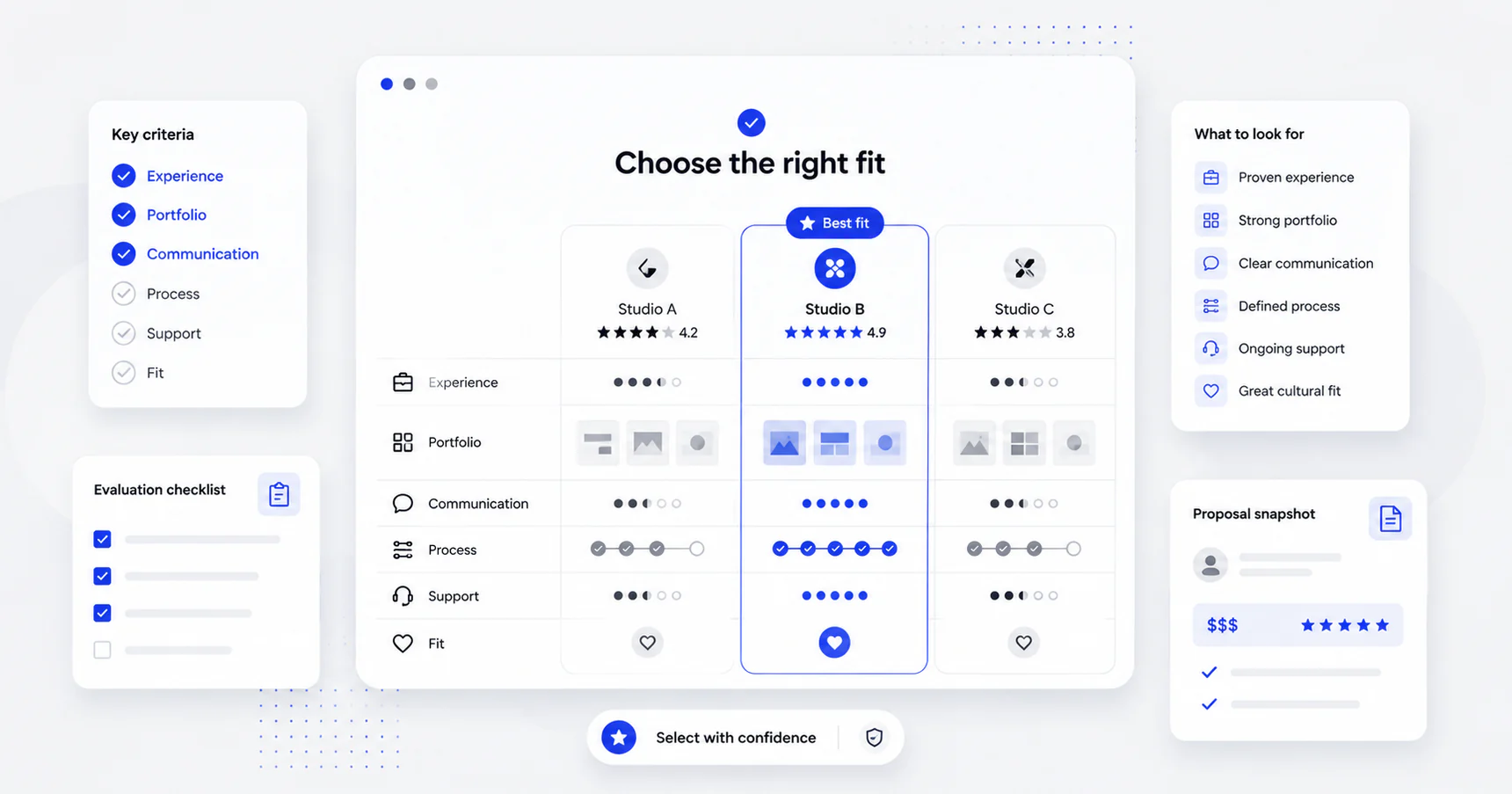
There's no universal best web designer — there's only the best fit for your goals, budget, and timeline. That said, a few things separate solid professionals from risky hires:
A portfolio with real, working sites
Not just polished screenshots — actual live URLs you can click through on your phone and laptop. Look for variety that's still relevant to your industry or business size, not just one flashy example repeated in different colors.
Design and development competence
A beautiful design that breaks the moment it's coded, or loads slowly, or isn't mobile-responsive, isn't actually a good website. Ask whether the same person or team handles both design and build, or whether it's handed off — handoffs are where quality often gets lost.
Clear, two-way communication
During your first conversation, notice whether they're asking about your business goals or just talking about themselves. The good ones ask more questions than they answer in a first call.
Transparent process and pricing
Vague answers about cost, timeline, or what's included are a red flag. You should walk away from an initial conversation with a rough sense of investment and next steps, not just a "let's chat more."
Questions to Ask a Web Designer Before You Hire
Bring this list to your first call or email exchange — the answers (or lack of them) will tell you a lot.
- Can I see live examples of sites you've built, not just designed?
- Will I own the website, domain, and code once it's finished?
- What platform will the site be built on, and can I update it myself afterward?
- What's included in the price — revisions, copywriting, SEO basics, mobile optimization?
- What's your typical timeline from kickoff to launch?
- Who do I contact if something breaks after the site goes live?
- Do you offer ongoing maintenance, or is this a one-time build?
- Have you worked with businesses in my industry before?
If a designer gets cagey or vague on any of these, treat it as useful information.
Freelancer vs. Choosing a Web Design Agency
Both paths can work — it depends on what you need.
A freelancer
A freelancer is often more affordable and gives you a direct line to the person doing the work. The risk: if they get busy, sick, or move on to other projects, your timeline (and support afterward) can suffer.
An agency or small studio
An agency or small studio typically offers more reliability — there's a team behind the work, not just one person's bandwidth. Look for studios that are full-service, meaning they handle both design and development under one roof, so you're not stuck managing two vendors and pointing fingers when something doesn't line up.
When you're choosing a web design agency, ask the same questions you'd ask a freelancer, plus: Who specifically will be working on my project, and will I have direct access to them, or just a project manager?
Watch Out for These Red Flags
- Pressure to sign before you've seen real examples of their work
- No clear answer on who owns the site and code after launch
- Pricing that seems "too good to be true" with no explanation of what's excluded
- Portfolios full of template-based sites that all look the same
- No mention of mobile responsiveness, page speed, or basic SEO
Bringing It All Together
Choosing the right web designer comes down to three things: a portfolio that proves they can actually build (not just design), clear communication from the first conversation, and honest answers to direct questions about ownership, pricing, and support. Take your time, ask the questions above, and don't be afraid to walk away from anyone who can't answer them clearly.
If you're currently comparing options, Fractionl Studio is a full-service design and development studio — meaning the same team handles your design and the build, so nothing gets lost in translation.
You can see our process and what's included at fractionlstudio.com/services.
Work with Fractionl
Ready to move the work forward?
Tell us what you are building, improving, or trying to solve.