
Web Design
What Makes a Great Small Business Website? 12 Must-Have Features
Explore 12 essential website features that help small businesses create clarity, build trust, improve usability, and guide customers toward action.
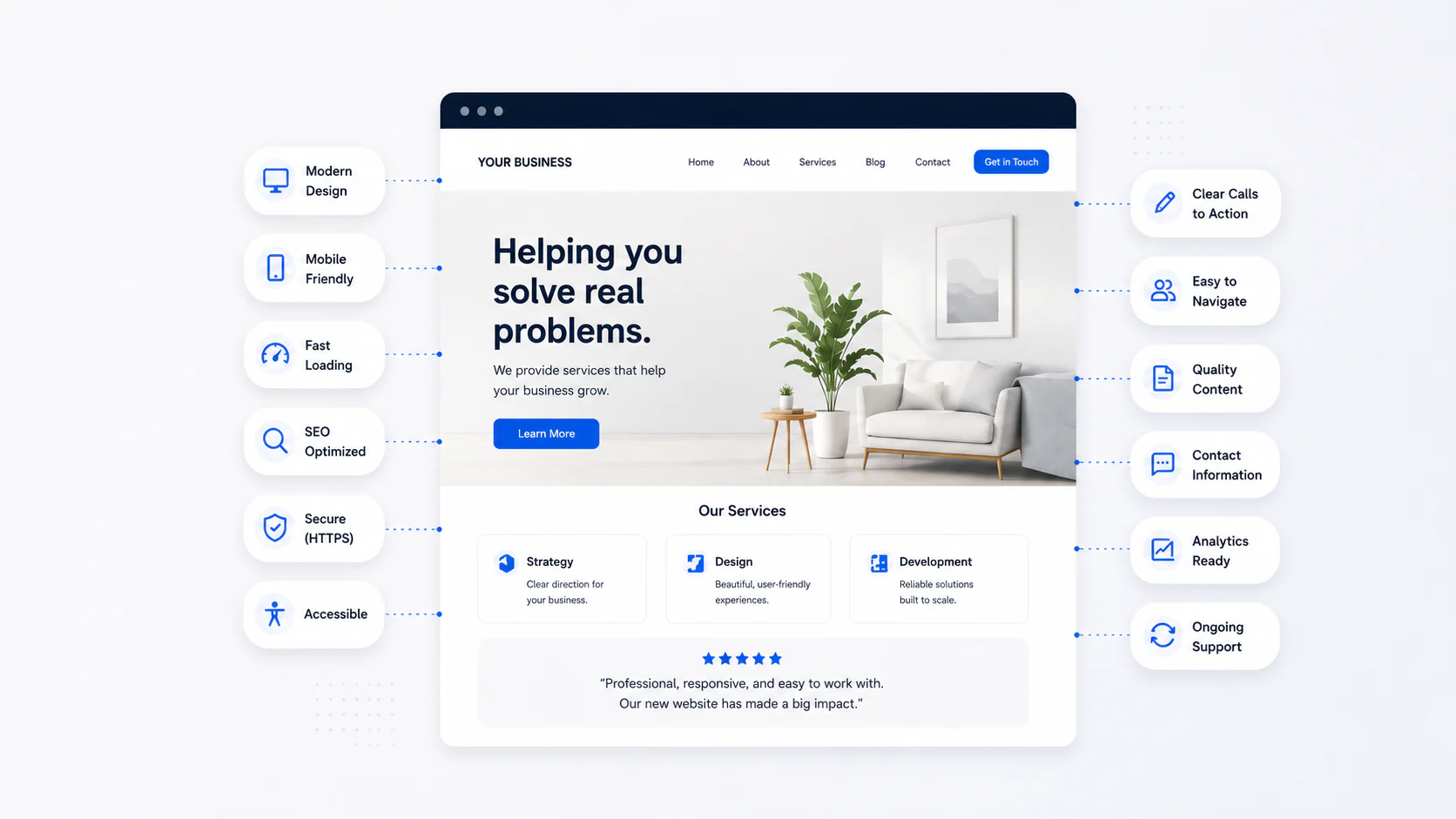
Your website is often the first impression a potential customer has of your business — before they ever walk through your door or pick up the phone. A great small business website does more than look nice. It builds trust, answers questions, and turns visitors into customers.
Whether you're launching your first site or rebuilding an outdated one, this business website checklist covers the 12 features every small business website needs to compete in 2026.
1. A Clean, Fast-Loading Design
Visitors decide whether to stay on your site within seconds. A cluttered layout, slow load time, or outdated design sends people straight to a competitor. Following website best practices means prioritizing simplicity: clear navigation, plenty of white space, and pages that load in under three seconds. Speed isn't just about user experience either — search engines factor load time into rankings, so a fast site helps you get found, too.
2. Mobile-Responsive Layout
More than half of all web traffic now comes from phones and tablets. If your site isn't built to resize and reflow on smaller screens, you're losing customers before they even see what you offer. A truly responsive design adjusts images, menus, and text automatically, so the experience feels just as polished on a phone as it does on a desktop.
3. Clear Calls to Action (CTAs)
Every page should answer the question: "What do I want this visitor to do next?" Whether it's "Book a Consultation," "Call Now," or "Get a Free Quote," your CTAs should be visible, specific, and repeated throughout the site — not buried in a footer. This is one of the simplest professional website features to implement, and one of the most commonly overlooked.
4. An About Page That Builds Trust
People do business with people, not logos. An About page that shares your story, your team, and your values helps visitors feel confident choosing you over a faceless competitor. For local and service-based businesses especially, this page often gets more traffic than you'd expect — it's where leads go to decide if they trust you.
5. Easy-to-Find Contact Information
Your phone number, email, and physical address (if applicable) should never require a hunt. Place this information in your header or footer on every page, not just a dedicated Contact page. A contact form is helpful, but it shouldn't be the only way to reach you — some customers still prefer to call.
6. Service or Product Pages That Actually Explain What You Do
Vague homepage copy ("We do it all!") loses customers. Dedicated pages for each core service or product line — with clear descriptions, pricing guidance where appropriate, and relevant images — help visitors and search engines alike understand exactly what you offer and whether it fits their needs.
7. Social Proof: Reviews and Testimonials
Trust signals matter more online than almost anywhere else, since visitors can't read body language or shake your hand. Star ratings, client testimonials, case studies, and logos of businesses you've worked with all reduce the perceived risk of choosing a small or unfamiliar business over a bigger name.
8. Search Engine Optimization (SEO) Basics
A beautiful site that no one finds isn't doing its job. Website essentials here include proper page titles, meta descriptions, header tags, alt text on images, and a sitemap submitted to Google. SEO isn't a one-time setup — but getting the foundation right from launch makes everything that follows easier.
9. A Blog or Resource Section
Regularly publishing helpful content — like this post — does double duty: it improves your SEO over time by giving search engines fresh, relevant content to index, and it positions you as a knowledgeable, trustworthy choice in your industry. Even a few well-written posts a month can meaningfully move the needle.
10. Security (SSL and Beyond)
An SSL certificate (the padlock icon next to your URL) is non-negotiable in 2026 — without it, browsers actively warn visitors that your site isn't secure, and search engines penalize sites that lack it. Beyond SSL, regular backups and software updates protect you and your customers from data breaches.
11. Integration With the Tools You Already Use
A great business website doesn't operate in isolation. Whether it's a CRM to manage leads, a booking calendar, email marketing software, or payment processing, your site should connect with the systems running your business — not create extra manual work. This is where a lot of "DIY" website builders fall short, and where custom development pays off.
12. Easy Content Management
You shouldn't need to call a developer every time you want to update your hours, add a new service, or change a price. A well-built site gives you (or your team) the ability to make simple edits yourself, while still leaving room for a developer to handle bigger changes when needed.
Putting It All Together
A great small business website isn't about having the flashiest design — it's about combining these business website features into a site that's fast, trustworthy, easy to use, and built to grow with you. Run through this checklist on your current site, and you'll likely spot one or two quick wins, along with a clearer sense of where a bigger refresh might be worth the investment.
Not sure where your website stands? At Fractionl Studio, we help small businesses design and build sites that check every box on this list — from clean design and CRM integration to ongoing support you can actually reach by phone.
Or get in touch to talk through what your business needs.
Work with Fractionl
Ready to move the work forward?
Tell us what you are building, improving, or trying to solve.