
Web Design
How Much Does a Website Cost in Canada? (2026 Pricing Guide)
See realistic 2026 pricing for Canadian small business websites, custom development, and e-commerce, with the factors and ongoing costs that shape a quote.

If you've started shopping around for a new website, you've probably noticed the numbers are all over the map. One freelancer quotes you $800. An agency down the street quotes $35,000. Both are building “a website” — so what's actually going on?
The short answer: website cost in Canada depends almost entirely on who builds it, what it needs to do, and how custom the design and functionality are. This guide breaks down realistic 2026 pricing across every tier, so you know what you're actually paying for before you sign anything.
Quick Answer: Average Website Cost in Canada (2026)
Most Canadian small business websites fall between $2,500 and $12,000, with the bulk of standard, professionally built sites landing in the $3,500–$8,000 range. Here's the broader picture across project types:
- DIY website builder (Wix, Squarespace): $15–$50/month, no upfront design cost
- Freelancer-built small business site: $1,500–$8,000
- Agency-built small business site: $3,500–$12,000
- Custom website development (agency, multi-feature): $10,000–$25,000+
- E-commerce website: $3,000 (basic Shopify) to $40,000+ (custom/headless)
- Enterprise web application: $25,000–$150,000+
These figures don't usually include ongoing hosting, domain renewal, or maintenance, which we'll cover further down.
Website Design Cost vs. Website Development Cost: What's the Difference?
People often use “design” and “development” interchangeably, but they're separate parts of the bill.
Website design cost covers the visual side: layout, branding consistency, typography, imagery, and user experience decisions. A designer figures out how the site should look and feel, and how visitors move through it.
Website development cost covers the technical build: turning that design into a working site, writing the code, setting up the CMS, building forms, integrations, and making sure everything functions on desktop and mobile.
Some studios quote these as one combined number; others break them out separately. If you're getting a quote, ask whether design and development are itemized or bundled, since that affects how easily you can adjust scope later.
Small Business Website Cost: Pricing by Tier
Under $1,500 — Bare-bones or DIY-adjacent
Usually a solo freelancer or an offshore team working through a local middleman. Expect a 3–5 page template-based site, mobile-responsive layout, a contact form, and basic SEO setup. It can work as a placeholder, but customization, copywriting, and support are limited.
$1,500–$5,000 — Standard small business site
This is where many Canadian small businesses land. It typically includes a handful of service or product pages, SEO-ready structure, mobile optimization, and a clean, professional, often semi-custom design.
$5,000–$10,000 — Advanced or fully custom site
Built for businesses with more moving parts: multiple locations, booking or scheduling systems, content hubs, blog infrastructure, or CRM integrations. Design is typically fully custom rather than template-based.
$10,000–$25,000+ — Complex custom builds
This tier is for businesses that need custom functionality such as member portals, advanced integrations, multi-language sites, or a build designed to scale with significant traffic or content volume.
What Affects Custom Website Pricing
- Number and complexity of pages. A 5-page brochure site costs a fraction of a 20-page site with unique layouts.
- Custom design vs. template. A template with custom branding costs less than a fully custom layout.
- Integrations. Booking systems, CRMs, payment processing, and third-party APIs all add development time.
- Content creation. Professional copywriting, photography, and video are not usually included in a base quote.
- Platform and tech stack. WordPress is generally affordable; custom-coded stacks cost more upfront but can offer stronger performance and scalability.
- Freelancer vs. agency. Agencies add project management, QA, and broader skill coverage to the price.
- Location. Toronto and Vancouver agency rates can run higher than the national average.
E-Commerce Website Cost in Canada
- Basic Shopify store: starting around $3,000
- Mid-range custom store (WooCommerce or Shopify with a custom theme): $10,000–$25,000
- Complex, headless, or multi-vendor commerce platform: $25,000–$100,000+
Platform fees are separate and ongoing. Shopify charges a monthly platform fee, while WooCommerce is free software but requires hosting, plugins, and maintenance.
Don't Forget the Ongoing Costs
- Domain name: $10–$20/year
- Hosting: $20–$200/month depending on provider and performance needs
- SSL certificate: usually bundled free with hosting
- Maintenance and support plan: $50–$200/month for small sites
- Premium WordPress plugins: $200–$1,200/year
- Ongoing SEO: $500–$3,000/month for active ranking support
- GST/HST: applies to website services when the provider is a registrant
Budgeting for these costs upfront avoids the surprise of a site that looked affordable but comes with expenses nobody mentioned in the proposal.
How to Get an Accurate Quote
The fastest way to get a number that actually applies to your business is to come to the conversation with a rough sense of:
- How many pages or sections you need
- Whether you need custom functionality such as booking, e-commerce, CRM integration, or member login
- Whether you already have copy and photos
- Your timeline
A studio that asks these questions before quoting is doing it right. Anyone quoting a flat number without knowing your scope is guessing.
The Bottom Line
Website cost in Canada in 2026 isn't a single number. It's a range shaped by scope, design complexity, and who's building it. A simple, professional small business site reasonably lands between $2,500 and $8,000. Anything more custom, integrated, or e-commerce-driven climbs from there. The right move isn't chasing the lowest quote; it's understanding what's included at each price point so you're paying for a site that fits where your business is now and where it's headed next.
Keep reading
Related insights.
Web Design
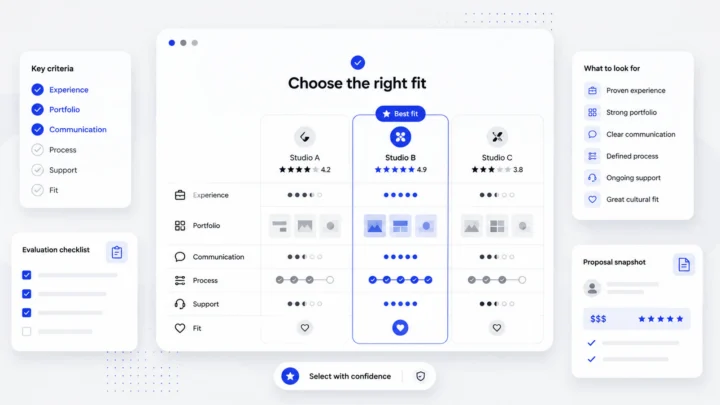
How to Choose the Right Web Designer for Your Business
Learn how to compare web designers, ask better questions, and choose the right fit for your business without deciding on price or appearance alone.
Read Insight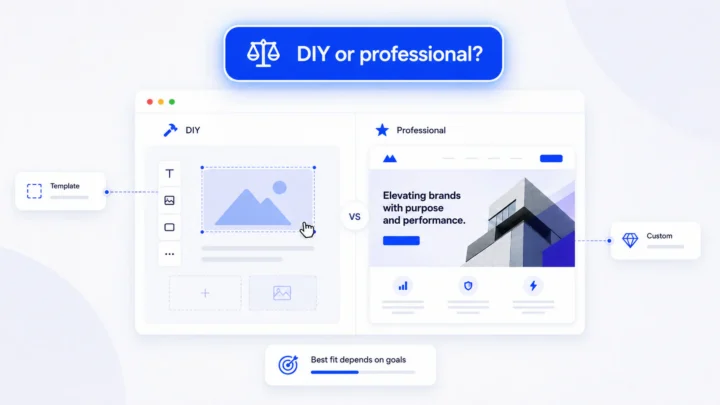
Web Design
Should You Build Your Own Website or Hire a Professional?
Compare DIY website builders with professional web design to decide which approach best fits your goals, budget, and website complexity.
Read InsightWork with Fractionl
Ready to move the work forward?
Tell us what you are building, improving, or trying to solve.